Tag: citybreak

Under the Radar City Breaks That Are Causing a Buzz

By Amira Hashish

Europe is brimming with city breaks that you may just not have thought about. Sure, there are the big players that will always pull in the crowds. Who doesn’t love a trip to Rome or an escape to Paris? But there are so many under the radar options that may just take you by surprise. From Scandinavia’s coolest spots to the Sicilian city that blends architectural beauty, these are the easy-reach destinations that should be on your next mini adventure list…

Aarhus

Denmark’s second city is small but mighty. Ideal for a cosy weekend break, the sights and attractions are all within walking distance. A stroll around the Latin Quarter is a great starting point. To see Scandi makers in action, head over to the Godsbanen centre where local artisans open up their studios.  One of the most-photographed spots is the colourful cobbled street of Møllestien whilst Aarhus City Hall has a clock tower designed by Arne Jacobsen. A little further afield is the ground-breaking building and collection at Moesgaard Museum. 

The city is centred around the harbour which houses the Dokk 1 Cultural Centre alongside statement buildings such as the Iceberg at the new Aarhus Ø district. You can also swim at the harbour baths, designed by Bjarke Ingels, or take a green kayak out for free, as long as you bring back some rubbish from your trip. The shopping is as Scandi cool as you would hope with the likes of Ganni, Stine Goya and Rains pitching up with beautiful boutiques. Aarhus has become something of a foodie hotspot too, from many Michelin-starred options including Gastrome to a street food market for casually delicious bites. For an after dinner cocktail head to St Paul’s Apothek. Oh…and it’s pronounced “Or-hoose”.

Getting there: Aarhus is close to both Aarhus Airport and Billund Airport. You can take the train to Aarhus from Copenhagen or drive in just over three hours. It is also possible to get the ferry to Aarhus from Zealand.

Porto

Lisbon gets all the love (and rightly so) but it is worth making time for Porto too. Bringing an altogether different vibe, it is the perfect size for a weekend and super walkable. If you arrive via São Bento train station you will be struck by the 20,000 painted tiles by artist Jorge Colaço which are an attraction in their own right. The city’s port-wine cellars are dotted around the south side of the Douro River and are a must for a tasting session. Head back over the Dom Luís I Bridge to explore the pretty streets of the UNESCO World Heritage Ribeira old town. Pitch up at a riverside bar or restaurant for a laid-back dinner.

Getting there: Porto has its own airport with direct flights from London. Alternatively, train your way around Portugal and arrive at São Bento.

Gothenburg

I am calling it; Gothenburg is Sweden’s coolest city. Sure, Stockholm is a joy but its edgier younger sibling is a condensed version of so many of the capital’s finest bits. There are Scandi homeware stores in abundance alongside an impressive food and drink scene, making for an effortlessly chic escape. Not to mention its eco credentials. The port city keeps getting crowned the most sustainable city in the world with half of its public transport network running off renewable energy.  For a culture fix, the Kondstmuseum awaits while Liseberg Amusement Park is a fun attraction. Hotel Pigalle is the city’s sexiest bolthole with an excellent rooftop bar.

Getting there: Less than two hours by plane from London, flights are frequent and surprisingly low-priced.

Naples

The bustling city of Naples is so often misunderstood. The gateway to the Amalfi Coast is grittier than its coastal gems but it has an altogether different charm. Famous for its pizza, it is packed with fabulous trattorias alongside cool cocktail or espresso bars. Piazza del Plebiscito is a good starting point for exploring this layered city. The intersection between the enclosed spaces of the old city and the marina, it is also home to the Basilica of San Francesco di Paola. The circular neoclassical church is a sight worth seeing. On the opposite side of the square, the Royal Palace leads towards the sea and is linked to another pearl of Bourbon architecture: the San Carlo Theatre – the oldest opera house in Europe. A stroll along Via Toledo, brimming with fashion boutiques and makers workshops, is a must. I would recommend staying in the nearby Chiaia area which feels more refined than some of the other neighbourhoods but is just as sumptuous. Alternatively, SuperOtium is an art-driven hotel with beautiful, innovative design in the more touristic area next to the National Archaeological Museum. Fancy seeing the works of Italian masters alongside breathtaking views across the city and bay? Take the tram to Capodimonte Palace and Museum.

Getting there: Just over two hours from London to Naples International Airport, which is close to the city. 

Marseille

The multicultural counterpart to the Cote d’Azur is quickly garnering a buzz. Pretty pastel-coloured streets house swanky shops and cafes, whilst the Musée des Beaux-Arts draws in the art lovers. Those in the know pick up their groceries at the seafood market at the Norman Foster-designed Vieux-Port. Venture to the hilltop Basilica for the views or take a hike at the Calanques National Park on the Mediterranean coastlines. Tuba Club is the place to pitch up for a night. A former scuba diving school, it is now the city’s most coveted boutique hotel, perched on a cliff. With Nice in one direction and Provence to the other, you will be in good company.

Getting there: Marseille Provence Airport is less than a two-hour flight from London.

Syracuse

The blend of Baroque, Greek, Roman and Medieval architecture that winds throughout this Sicilian city is something to behold. Stay in the historical centre of Ortigia to immerse yourself in its grandeur. It gets super hot in the summer but fear not, there is a small beach called Spiaggia di Cala Rossa which is just a few steps away from the winding shopping streets. Fancy an insider tip?  Piazza Santa Lucia (St. Lucy’s Square), between the Basilica and the charming Borgata neighborhood, takes place every Sunday morning and is packed with wonderful vintage finds but you will need to get there early. Not forgetting the food (it’s hard to have a bad meal here) with Davè being a must visit for standout dishes served in a charming al fresco setting. Verga Courtyard is the place to rock up for cocktail in a beautiful setting.

Getting there: Fly into Catania airport then hop on one of the frequent buses which are about an hour’s drive away. Alternatively, Syracuse has its own train station if you tie this in with a wider Sicilian adventure.

Athens

We know we love the Greek islands but the country’s capital is often overlooked. More fool us. This vibrant city is perfect for an off-season visit, with warm temperatures even extending into Autumn. Against the backdrop of the Acropolis, the creative scene is thriving with pop-up galleries and innovative restaurants to be explored alongside design-driven small hotels. Stretches of golden sand line the beaches and the seafood is as delicious as you would hope. 

Getting there: Direct flights from London take just over three hours.

Valencia

Valencia is the birthplace of paella, which should be reason alone to visit. There are many more draws to this buzzy but not too overcrowded city though. Cutting-edge architecture sits alongside the Gothic meets Baroque cathedral. A lovely stroll can take you from the Old Town, where you will be greeted by huge stone gates, to the hipper Ruzafa neighbourhood with its colourful buildings. The City of Arts and Sciences houses sparkling white buildings with a science museum and opera house. To take in nature, the nine-kilometer stretch of Turia Gardens are home to striking palm trees, boating lakes, manicured gardens and bicycle routes. There are beaches too and the sun shines throughout the year. What’s not to love? 

Getting there: Around two and a half hours flying time from London.

Europe’s Hottest New Hotel Openings

By Amira Hashish

As Europe opens its doors for the season, there are some very glamorous new hotel openings to get excited about. From the new dawn of Capri’s original hotel to a glamorous getaway on the Athenian Riviera and Christian Louboutin’s first foray into hotelier life, here are the hotspots to have on your radar…

Son Net, Mallorca 

In a nutshell: Palma’s secret palace.

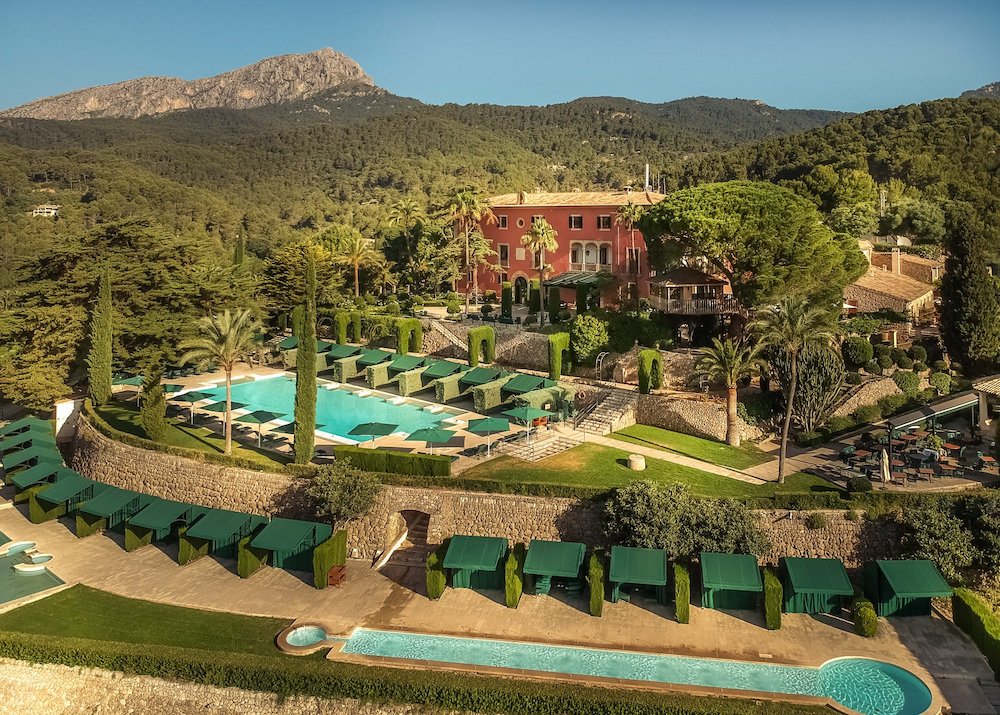
What’s the story? Just 20 minutes outside of Palma in Mallorca, this 17th-century estate is palatial in every sense. In the UNESCO World Heritage Tramuntana Mountains, there is exquisite scenery and art at every turn. Chill in one of the private cabanas, take a dip in one of the pools, book in a spa treatment or explore the acres of gardens. Then retreat to a meticulously restored suite by interior designer Lorenzo Castillo with rustic beams, stone floors and antique fireplaces. Keep an eye out for the private chapel, vineyard and a century-old olive oil press as well. If a day at sea appeals, ask about the sailboat tours of the island’s turquoise waters and white sand coves.

Book: sonnet.es

Hotel La Palma, Capri

In a nutshell: The most coveted opening in Capri.

What’s the story? The ultimate La Dolce Vita experience awaits in the hotly anticipated rebirth of Hotel La Palma. Capri’s first ever hotel, which has been hosting the great and good on the island for more than 200 years, dramatically shut its doors last season to embark on a major overhaul. It is now under the helm of the Oetker Collection (Le Bristol in Paris, Eden Rock in St Barths, Jumby Bay in the Caribbean) and the Reuben Brothers. In the very heart of the Amalfi’s party piazza, its new guise will be revealed this summer and we are expecting big, bold, beautiful things. Another hot ticket will be a daybed at La Palma Beach Club on the coast. 

Book: oetkercollection.com 

One&Only Aesthesis, Athens

In a nutshell: The place to draw out summer.

What’s the story? Set on a private oceanfront estate, One&Only’s latest European opening is an idyllic base for an Athenian adventure. Rooms are dotted around the Riviera views and coastline. The restaurant is set to highlight traditional dishes from the region and a spa will offer treatments by Chenot. We have a little longer to wait for this one as it is expected to debut in autumn but the good news is that this is the perfect time to visit Athens so you can make that Greek summer getaway last a little longer.  

Book: oneandonlyresorts.com 

Hotel Vermelho, Melides

In a nutshell: Christian Louboutin becomes a hotelier.

What’s the story? Luxury shoe designer Christian Louboutin brings his glamorous eye to the Alentejo coast in Portugal with his very own hotel opening. He named the boutique escape after his love of the colour red (Vermelho means red in Portugese) and you will find splashes of it around the property. Each of the thirteen luxury rooms is individually designed with rare artworks, handpicked by Louboutin, alongside local Alentejo tiles. Local craftsmanship is championed and frescoes adorn the ceilings. The restaurant, named Xtian, embraces traditional cuisine with artisanal tableware and an ever-changing atmosphere that gets more sumptuous as the sun sets. 

Book: vermelhohotel.com 

Hôtel Dame des Arts, Paris

In a nutshell: A chic stay for the creative set.

What’s the story? Originally built in the 1950s, the Hôtel Dame des Arts has been given a new lease of life by lauded Parisian designer Raphaël Navot. There is an industrial edge to the new look, befitting of the creative scene in its surroundings of the Latin Quarter. The pièce de résistance is the rooftop bar with 360-degree views of the city whilst the courtyard restaurant headed by Chef Othoniel Alvarez Castaneda fuses French cuisine with Mexican flavour. Book a terrace room overlooking the Eiffel Tower to live out that Parisian fantasy. Other notable Parisian openings include Le Grand Mazarin in Le Marais and La Fantaisie in the always cool 9th arrondissement. Both are designed by Martin Brudnizki who never shies away from the lavish… he counts Annabel’s in Mayfair amongst his projects.

Book: damedesarts.com

COMO Le Montrachet, Burgundy

In a nutshell: Wine country with the wow factor.

What’s the story? The first COMO hotel in France has recently started welcoming guests in Burgundy. One for wine lovers, it is nestled just a few steps from the legendary Le Montrachet vineyard. A traditional palace takes centre stage with surrounding heritage buildings comprising 31 bedrooms. The on site restaurant offers wine-paired menus (but of course) and there is a spa too. Paola Navone Otto Studio has created an elegant, elevated design with a nod to the palettes of the countryside.

Book: comohotels.com 

Hoxton, Brussels

In a nutshell: That Seventies vibe.

What’s the story? It is hard to keep up with the latest buzzy opening from the Hoxton collection but if you are seeking a cool city break or looking for a stylish place to stay on business, the Brussels edition is one to watch. Housed in a brutalist tower building and the former European headquarters of IBM, there is a Seventies vibe to the design scheme. The rooftop terrace has fabulous views and the site is also home to the first Working From_ co-working space in Europe. Doors open in May. Meanwhile, Hoxton Berlin has just opened in the city’s Charlottenburg neighbourhood.

Book: thehoxton.com 

Six Senses, Rome

In a nutshell: Roman baths in a picturesque Palazzo

What’s the story? When in Rome, if you are on the hunt for all the grandeur of a Palazzo coupled with the ultimate spa experience look no further than Italy’s first Six Senses opening. Super close to Fontana di Trevi and the Pantheon, the location could not be easier and you can soak up the vistas from the rooftop terrace. With a UNESCO-listed façade setting the tone, many of the building’s original features have been brought back to their original glory including the rather magnificent central staircase. The spa revolves around the traditional Roman baths whilst the restaurant merges the ambience of a classic trattoria with organic ingredients. Other openings from the collection include the recently launched Six Senses Crans-Montana in Switzerland with the Loire Valley, Austria and Iceland also in the pipeline.

Book: sixsenses.com 

Helsinki

Best Kept Secret European City Breaks

By Amira Hashish

Seeking a European city break in an under the radar hotspot? Whether you are in the mood for some winter sun or fancy a hygge getaway, these lesser trodden destinations offer fast direct flights from London and so much fun when you get there…

Gothenburg, Sweden

Gothenburg

Stockholm’s younger sibling is, dare we say it, even more hip than its big brother. Brimming with the beautifully designed restaurants, bars and homeware shops that Sweden does so well, this small but perfectly formed city is ideal for a weekend break. Head to underground bar Stranger for a speakeasy vibe and an inventive drinks list or Koka for a fine dining feast. All the best spots are within walking distance and there is a laid-back but vibrant atmosphere. We’d advise taking an empty suitcase ready for all those Scandi style finds that you will want to bring home. 

Where to stay: Hotel Pigalle for decadence in the thick of things without the eye-watering price tag. The rooftop bar is a hoot.

Flight duration: 1 hour 55 minutes

Naples, Italy

Naples

Often overlooked as the gateway to the Amalfi, there is a lot to love about culture-packed Naples itself. Whilst it may have a reputation for being a little rough around the edges, that is part of its charm. The Chiaia neighbourhood is the most charismatic and full of sumptuous restaurants, fun bars and excellent shops. Needless to say, you’ll eat some of the best pizza and there is a buzz in the air throughout the seasons. Pizzeria Concettina ai Tre Santi is the trendy pizza option and great for people spotting. For a truly authentic experience which feels like you have stepped straight into your favourite Nonna’s kitchen head to Osteria Della Mattonella. Do cocktails at Flanagan’s on Via Carlo Poerio and coffee at Gran Caffè Gambrinus. 

SuperOtium Hotel Naples

Where to stay:  SuperOtium is a boutique hotel with an artistic twist which may not be on the best side of town but is a destination in itself.

Flight duration: 2 hours 40 minutes 

Porto, Portugal

Porto

Lisbon may be Portugal’s more obvious choice but Porto packs a punch. Design aficionados flock here to seek artisanal brands that have an edgy flair. With the sea on the doorstep there is an added appeal. The food and drink scene is on point too. We’d recommend a trip to Tia Tia if natural wines are your thing. Or to soak up the culture over tasty dishes make a beeline for Casario in the Gran Cruz House hotel. The restaurant is housed in a 16th-century building which was once used as a trade house for coffee.

HomePlace Holiday Let Porto

Where to stay: Homeplace Holiday Let for a characterful retreat close to all the loveliest spots. Lovely owner and design guru Wendy loved the city so much that she recently relocated there from London.

Flight duration: 2 hours 20 minutes

Eindhoven, The Netherlands

Eindhoven, The Netherlands

This lesser celebrated corner of the Netherlands is a hub for innovation. Once the home of Philips electronics, much of the city is made up of former factories which have been converted into industrial style hotels, restaurants and shops. A smart community of creatives has dotted the town with galleries, eateries and revamped spaces. A great starting point is Kazerne; a listed former military police barracks and industrial warehouse, which fills its 2500m² with art, food, drink and a design-driven hotel. Let’s just say, you won’t regret venturing beyond Amsterdam. 

Inntel Hotels Art Eindhoven

Stay: Inntel Hotels Art Eindhoven is partly housed in the Philips Light Tower, where the first light bulbs in the world were made and tested. Art, history and science collide in the imposing building which dates back to 1909.

Flight duration: 1 hour

Hamburg, Germany

Hamburg

Berlin may be where it’s at but Hamburg quietly does a lot to draw a cool crowd. Ideal for a cosy 48 hours with some after-hours partying, it is home to world-class festive markets, bountiful bars and lots of cafes for whiling away the afternoon after a scenic stroll along the lake. Salt and Silver in St Pauli is a popular pitstop for tapas, wine and atmosphere.

The Fontenay, Hamburg

Where to stay: The Fontenay is a luxurious offering inside a picturesque park on the tranquil banks of Lake Alster.

Flight duration: 1 hour 45 minutes

Seville, Spain

Seville

This small but perfectly formed Spanish gem is frequently blessed with blue skies even in the coldest months. Hop from one tapas bar to another to savour the most delicious small dishes that can be washed down with a glass of something fabulous on a modest budget. El Rinconcillo has been doing its thing for more than 350-years and is still up there with the best. The intricate architecture and orange-tree filled squares are a sight to behold. A visit to the medieval Alcázar, an icon of Moorish interiors and formal gardens, is a must.

Palacio Villapanés, Seville

Where to stay: Palacio Villapanés is a converted 18th Century Palace with all the trimmings on the edge of the old town.

Flight duration: 2 hours 45 minutes

Zurich, Switzerland 

Zurich

Oozing a sense of suaveness, the young population of Zurich has brought a swathe of eateries and bars to the city. From breakfast at Milchbar to dinner at Loft Five and drinks at Dante, we’d recommend checking into your hotel, getting dressed up and making a night of it. A walk along the lake to admire the landscape the next day is a great way to work off the hangover.

marktgasse hotel zurich

Where to stay: Marktgasse Hotel is one of Zurich’s oldest inns with a distinctly modern twist. It has been restored into a contemporary 39-bedroom boutique with two restaurants and a bar.

Flight duration: 1 hour 45 minutes

Antwerp, Belgium

Antwerp

This little city with a lot to offer makes waves amongst the creative set. Known for its sparkling Diamond District, it is the place to go for a shopping break when you want to discover something special. Do dinner at Album, Le Pristine or Veranda.

Guide Schoen Hotel Antwerp

Where to stay: Guide Schoen is a carefully crafted nine-suite hotel with a glittering cocktail bar in the city centre. 

Flight duration: 1 hour

Oslo, Norway

Oslo

From the Munch Museum to the Opera House, Oslo is a culture-fuelled city with quirky attractions. A standout is a floating sauna experience, heated with solar panels, in a small detox hut where you can warm up overlooking the Norwegian fjords then jump in the freezing cold water if you are daring enough. Meanwhile, Mathallen, a giant food court installed in Vulkan, is a hub of every kind of cuisine including shellfish, tacos, burgers, dim sum and sweet treats. Swing by Kollekted By for homeware and goodies.

The Thief Oslo

Where to stay: The Thief is a buzzy hideaway kitted out with international art, designer furniture and standout Nordic cuisine.

Flight duration: 2 hours 30 minutes

Helsinki, Finland

Helsinki

The Finnish flair for design is prevalent throughout its capital with plenty of places that blend style and sustainability. A couple of new players have popped up in the hospitality scene recently whilst old classics have undergone revamps. New kids on the block Teemaa Teahouse have introduced a tea house concept to the city whilst The Savoy restaurant, with interiors designed by architects Aino and Alvar Aalto, is a great upscale dining option.

Hotel Torni

Where to stay: Hotel Torni has been standing tall since 1931 but recently had a makeover to give this striking space a modern edge.

Flight duration: 3 hours 10 minutes

Copenhagen, Denmark

Copenhagen

Always a delight, Copenhagen is probably one of the more obvious choices from our list but its world-class offerings in the most humble environment make it worthy of a mention. Noma is back and better than ever, scooping the coveted title of World’s Best Restaurant again. Other foodie highlights include Fiskebar in the oh so cool Meatpacking District followed by a nightcap in Lidkoeb. There is plenty to fill your days with as well; bike or boat along the canal or amuse yourself at Tivoli Gardens. Soho House members will be pleased to know that a club has opened right on the waterfront.

Hotel Sanders

Where to stay: Hotel Sanders gives good hygge with wicker, wood, fireplaces and cozy corners.

Flight duration: 2 hours

Unusual City Breaks

By Anya Cooklin-Lofting

What cities spring to mind when you fancy a culturally rich, stimulating, exciting city break with friends or a loved one? Paris, of course. Rome, naturally. Innsbruck? If you say so. The timeless sophistication of the greatest and most renowned ‘weekender’ cities is undeniable and will appeal for generations to come, but what about some of the other incredible cultural hubs on our doorstep that don’t get the same kind of air time?

If you’re looking for somewhere new (to you) to explore, you’ve come to the right place. Read on for a round-up of some of the most interesting, unusual spots that the tourism industry has cruelly undersold…

Innsbruck, Austria

In Bill Bryson’s hilarious travelogue, Neither Here Nor There, he compares the quaintness and somehow pastiche predictability of Innsbruck to a Disney film he saw as a boy: “…what made a lasting indent on me was the Europeanness of the background – the cobbled streets, the toytown cards, the corner shops with a tinkling bell above the door… it all seemed so engaging and agreeably old-fashioned compared with the sleek and modern world I knew, and it left me with the unshakeable impression that Austria was somehow more European than the rest of Europe.” According to locals and online guides, the best time to visit Innsbruck is in the winter, mainly for the winter sports (there are nine ski resorts around the city) but also for the sheer levels of cosiness available. Sit down for a mug of Jägertee in Innsbruck’s architecturally diverse Old Town or rug-up and book a walking tour of the city including the heavily embellished stucco façade of the Baroque Helblinghaus for optimal Hygge (which makes for a perfect Danish segue…)

Skagen, Denmark

The northernmost town in Denmark, Skagen benefits from light, warm evenings in the summer months. This geographical advantage was enjoyed by the Skagen Painters, a group of Scandinavian artists who gathered there in the late 19th century to paint en plein air in the style of the French impressionists. Some of the most famous works (which are so heavily defined by their luminescent expression of natural light that visitors continue to enjoy today) are P.S Krøyer’s Hip Hip, Hurrah! and Anna Anchen’s Sunlight in the Blue Room.  H.C. Andersen, a national cultural personality, once said of Skagen’s artistic allure, “Here in the Danish country, you will find a nature that reminds you of the desert in Africa, of the ash mounts of Pompei and of birds flying around the dunes by the sea.” Should you decide to flock to the town with your paint box, make sure you stay at the Brøndums Hotel, which was the only hotel in Skagen at the time the artistic group was working.

Kutna Hora, Czech Republic

While you can easily take an hour’s train trip to visit Kutna Hora for a day trip from Prague, the city feels like such a distillation of history, ritual and legend it would be a shame not to spend more time there. The crowning glory of this unusual city break is the Church of All Saints, also known as the Bone Church, and its underground chapel, the Sedlec Ossuary. If you want a particularly unusual trip, this should cut the mustard. Built in the 14th century, the Church of All Saints was the site of the burial ground for the victims of the 1318 plague and for those killed in the Hussite wars. In the 1500s, the cemetery was abolished and the bones of all the bodies buried there were exhumed. The colloquial signifier, the Bone Church, begins to make sense when you discover that all the intricate decorations across the church’s walls are made from bones. The arrangement of the bones, which includes a chandelier in the centre of the nave containing all of the bones in the human body, is the work of František Rint, a Czech wood carver, who finished the macabre installation in 1870. For the stronger-stomached amongst us, a tour of the Sedlec Ossuary is offered with a 3-course lunch at a nearby restaurant. 

Annecy, France

Known as the Venice of the Alps amongst fans of the quintessentially French village, Annecy is a charming town in southeastern France known for its eponymous lake (immortalised in Paul Cézanne’s 19th-century Post-Impressionist work, The Lac d’Annecy) and snow-capped mountain vistas. It has all the charm of a baby Provence and certainly fewer tourists. The scale of the lake allows for watersports including sailing, paddleboarding, wakeboarding and scuba diving, and catamarans and yachts can be hired, too. For land-dwellers, the coiling canals of Annecy’s Vieille Ville prove the perfect warren in which to lose yourself entirely to the cobbled streets and putty-coloured houses. A trip to rural France seems pitifully incomplete without a lazy stroll around a farmer’s market, and both the local markets, the Old Town Market and Au Rendez Vous du Terroir are exactly what you might hope for. 

The Rise of Rome: Boutique Hotels to Have On Your Radar

By Amira Hashish

Rome is having a moment and we are here for it. The Eternal City is essentially an outdoor museum with breathtaking landmarks at every turn. Little wonder it has long formed the glamorous backdrop to movie sets or romantic breaks away. 

Despite its incredible architecture and Italian flair for style, there has been a surprising lack of design-driven boutique hotels to enjoy amongst the grandeur of the capital. Until now. 

Rome has undergone a hospitality facelift with many of the big players making themselves at home in its neighbourhoods. The Hoxton Hotel paved the way with its buzzing bolthole in Parioli whilst Soho House has also opened its first Italian members club with rooms in the San Lorenzo district. The Edition has also very recently opened its doors and Nobu is set to make its mark very soon. Rome wasn’t built in a day, after all.

Here is a taste of who’s in town…

Hoxton Rome

The vibe: The cool kid on the block.

The lowdown: The Hoxton got the ball rolling for Rome’s hipster hotel scene. They have put a vintage twist on contemporary lodgings and the bedrooms wouldn’t look out of place in a classic Italian film. They come in six different sizes, all with comfy beds, rustic parquet floors and bright mid-century-inspired bathrooms. Some even have sun terraces. Cugino, the all-day cafe and terrace, is run in collaboration with local micro-bakery Marigold whilst Beverly is the West Coast American restaurant. 

Always keen to break new ground, the hotel is a little further from the tourist centre in Parioli, a neighbourhood full of great gelato spots, upmarket stores, and traditional trattorias. Villa Borghese is within easy walking distance, as are the MACRO (Museum of Contemporary Art) and the MAXXI (National Museum of 21st Century Art). The Trevi Fountain is about 30-minutes walk away.

Take me there: thehoxton.com/rome 

Soho House Rome

The vibe: The place to be seen.

The lowdown: The global members club chose Rome as the home of its first Italian outpost. We are sensing a pattern… It is in the heart of San Lorenzo, the artistic quarter of the capital, on Via Cesare De Lollis, a short walk from Sapienza University. Set across 10 storeys, the house has 49 bedrooms and 20 long-stay apartments. 

It wouldn’t be a Soho House without a statement rooftop. This one has 360 views of the city along with a pool, bar, and restaurant, and the brand’s first physical Soho Health Club. Fear not, you don’t have to be a member to book a room.

Take me there: sohohouse.com

Mama Roma

The vibe: A playful corner of an elegant neighbourhood.

The lowdown: Mama Shelter also made its Italian launch in Rome and it’s a whirlwind of fun. Mosaic floors and column capitals depicted on the walls meet the ceilings sprawled with artwork by graphic designer and artist Beniloys. There are communal-style pizza restaurants and the lovely rooftop, open from morning to late at night, is just the place for an aperitif overlooking glorious views of the city and the St. Peter’s dome. The brand has also launched its first-ever spa here, with an indoor swimming pool, sauna, hammam and gym. 

It is located in the elegant Prati district, on the right bank of the Tiber river. From here the Vatican City can be reached in a few minutes on foot, while the historic centre is a few underground stops away. The large avenues, with their fin-de-siècle and art nouveau style buildings, refined boutiques and trendy restaurants and bars, give the district its character. 

Take me there: mamashelter.com/roma

Nobu Hotel Roma

The vibe: De Niro nods to his Italian roots in style.

The lowdown: This is a big, bold entry into Italy from the ever-expanding Nobu Hotel collection. Two 19th Century buildings have been combined to create a modern space that celebrates its grand, historic past. The result is 122 guest rooms, a garden-rooftop terrace, city spa and club lounge with a music focus. 

The location couldn’t be more iconic. The hotel sits on the famous Via Veneto and is just a short walk from the park of Villa Borghese, Piazza Barberini, Trevi Fountain, and Piazza di Spagna. As for the restaurant, there are no details yet but the signature Japanese style fused with Italian ingredients should make for quite the mix.

Take me there: nobuhotels.com

The Rome EDITION

The vibe: A central spot to draw the design crowd.

The lowdown: Another first, this time for EDITION Hotels’ Italian debut. It will comprise 95 guest rooms, a Penthouse suite with a private terrace and a design-focused selection of food and drink spots, including a signature restaurant with an alfresco dining space. There’s always a playful touch with this brand and the Punch Room Bar will be the coveted cocktail haunt. There will also be a Rooftop Terrace and swimming pool for a bite or a dip overlooking the city. 

The hotel is housed within a historical striking building designed by Cesare Pascoletti in collaboration with architect Marcello Piacentini, one of Italy’s most famed architects of Rationalism in the early 20th century. A few steps from Via Veneto, the Spanish Steps are practically on its doorstep.

Take me there: editionhotels.com/rome

Bulgari Hotel Roma

The vibe: In the lap of luxury.

The lowdown: Set to open in 2023, Bulgari Hotel Roma will be in the Campo Marzio neighbourhood, minutes from the Bulgari flagship on Via Condotti. 

Italian architectural firm Antonio Citterio Patricia Viel are in the process of renovating and restoring its modernist building from the 1930s that faces two of the city’s most well-known landmarks: the Ara Pacis and the Mausoleum of Augustus, the first Roman Imperator. Michelin-starred chef Niko Romito is behind the restaurant concept. Watch this space.

Take me there: bulgarihotels.com

Follow @thedesigneditor and @clubrapport for more travel inspiration.

Summer Sun Culture Spots

By Anya Cooklin-Lofting

Picture the scene: you’ve donned your coolest, floatiest clothes, a pair of trusty flip-flops and a rather sweet straw hat you picked up at the stifling market square just yesterday afternoon. Your skin smells of suncream and there is a light breeze to cut through the relentless rays of glorious sunshine. It’s early, still, and the day still holds the promise of poolside peace, cocktails on the sand and a balmy evening with loved ones. Now, though, it’s time to check out some of the cultural hotspots of whichever island, city or untouched village you have escaped to for some of the very finest European summer sunshine.

Exploring the cultural gems of the local area while you switch off from the bustle of daily life is one of the most rewarding parts of a summer holiday. It helps to enrich your understanding of the region, from the religious sensibilities of the people to the aesthetic principles of the architecture, the influences on local cuisine to the customs of daily life. Local places of worship provide a cool sanctuary for a moment’s reflection while museums narrativise local history to give context and depth to the otherwise Instagrammable whitewashed walls and twisting cobbled streets. Read on for a few of the very best cultural must-sees in our favourite summer sun locations…

The Cyclades 

For ecclesiastical, architectural awe under the beating sun, look no further than Greece. Some of its world-famous churches are richly adorned and deliciously rustic, while others stand out against the cerulean firmament with their bright white, Cycladic silhouettes. One of the most culturally intriguing of Greece’s many churches is the 4th century Byzantine Church of Panagia Ekatontapiliani, or The Church of 100 Doors, located on the island of Paros. Paros is known for its white marble and decidedly un-touristy atmosphere, at least when compared to Mykonos, Rhodes or Santorini. Its most famous church is steeped in ancient legend; according to local lore, the 100th door, which is either hidden, undiscovered or non-existent, will appear again only when Constantinople becomes Greek again. 

Catalonia

This Spanish site of cultural interest has kept me coming back for more over the years: the Salvador Dalí House Museum, located in Port Lligat, Catalonia, on the east coast. A 15-minute walk from the quaint fishing village and resort of Cadaqués, the house-museum comprises the labyrinthine living quarters and studio space of the infamous Surrealist artist, Dalí himself. He lived and worked there from 1930 to 1982 amongst the eclectic, sprawling collection of memorabilia that trickles out into the grounds and, of course, onto the roof. The property is distinguishable from afar by the larger-than-life egg on the tiles of said roof, a primary Dalinian artistic symbol. Pick up an ice-cold beer at Bar Llevant Port Lligat just opposite the exit and then wander back along the rural roads towards Cadaqués for a plate of pan con tomate on the beach.

Ibiza

Notorious for its nightlife, Ibiza also boasts a rich cultural heritage to explore by day. It may surprise readers to know that Ibiza is actually one of the earliest towns in Europe, first settled by the Carthaginians in 654BC. It is also a UNESCO World Heritage Site. One of the most interesting parts of the town’s history is the way it has been used across centuries, from its use as a strategic port to a defensive fortress in its early life, and now, as one of the world’s most popular and infamous resorts. One of the best ways to immerse yourself in the town’s cultural heritage is to visit Can Ros, the Ethnographic Museum of Ibiza. The 300-year-old farmhouse, built in Ibiza’s rural architectural style known as Ibicenco, showcases an ethnographic collection of domestic items and artefacts that bring history to life. From household utensils to jewellery and from musical instruments to weaponry, Can Ros unlocks the private histories of the people who were here long before the holidaymakers.

Trogir

Croatia has become a go-to for summer sun, especially since 2012 when the country joined the EU. The move prompted a reinvestment in the Croatian economy and lessened custom control, resulting in almost 6 million tourist arrivals the following year alone. Each year, the country reports further increases, and it’s easy to see why when you consider the beautiful climate, the gorgeous beaches and the undeniable Game of Thrones draw. Popular spots include Dubrovnik, Split and Zagreb, each boasting their own cultural delights, but the town of Trogir, a UNESCO World Heritage Site just 27km from Split, is truly the country’s most mindblowing historic epicentre. Trogir is often considered an open museum due to its bounty of architectural must-sees, including a series of Gothic, Renaissance, Romanesque and Baroque structures. Walking within the city walls, tourists are treated to an endless stream of street-level sightseeing opportunities, such as the 13th-century Cathedral of St Lawrence, the city Loggia and the Cipiko Palaces. 

A Long Weekend in Budapest

By Anya Cooklin-Lofting

When one visits Budapest, one is greeted by two very distinct yet equally charming plains. I’m not talking about the city’s divided origins as Buda and Pest, but about the two most prominent ways of seeing it. Its first apparition as the Pearl of the Danube is the hodge-podge of Gothic, Renaissance, Romanesque and Baroque Revival architecture. The city throbs with the heft and weight of collonades, domes, spires and sculptures; an immersive map of its complicated history and cultural idiosyncrasies. The second is its doppelganger, shimmering and vivid in the reflections of its famous river and steaming baths. Once your attentions are drawn, there they will inescapably remain, noting the way the steeples warp in the ripples and the sunsets are somehow augmented in the wavelets.

To embark on a visit to Budapest ought to be a commitment to total submersion in Hungarian heritage. A city break in the country’s capital offers an abundance of cultural and historic sites, well-making, stress-busting steeps in its mineral-rich waters and unforgettable dining experiences. Read on for some tried-and-tested suggestions for a long weekend in ‘the Paris of the East.’ 

Eat & Drink

Budapest’s dining offering is exemplary but narrow. Most restaurants have a rather traditional leaning, although some, including Zeya Restaurant and Laurel Budapest, experiment on the common theme. For a more lively, relaxed brunch, lunch or dinner, the Jewish Quarter is home to some of the most beautiful and welcoming bistros and cafe-style restaurants. With its rich and resilient history, the district is a hugely vibrant and dynamic corner of the city and its eateries are flanked by gorgeous shops, clubs and of course, exquisite Synagogues. 

Macesz Bistro is a popular haunt, and while it’s currently closed in the wake of the pandemic, your visit will be worth the wait. Its contemporary twists on Hungarian Jewish classics are available a la carte or as curated tasting menus with delicious wine pairings. For a feast for the eyes as well as the tastebuds, you could also try MAZEL TOV, a biophilic atrium of a restaurant, strung with festoon lights and furnished with simple, wooden tables, which unsurprisingly, are hard to come by. Its Israeli-inspired dishes are served with warm, fluffy pitta bread, garnished with fresh herbs and bejewelled with pomegranate seeds.

For those with a taste for European nightlife, be sure to visit the Ruin Bars and Szimpla Kert in particular. The bars can be found in the Jewish Quarter in the ruins of abandoned buildings after the neighbourhood was left after the Second World War, hence their memorable name. 

See & Do

Without mentioning the architecture again (oops!), Budapest has a wealth of cultural must-sees. Buda Castle, for example, is a fairytale-like 13th-century palace seemingly conjured from the stone of Castle Hill. There is also Fisherman’s Bastion, a similarly spectacular fortification in the Romanesque Revival style, which features lots of 19th-century look-out points for sweeping views of the city.

One of the most impressive feats of bricks and mortar is the Hungarian Parliament Building, which sits on the eastern bank of the Danube. It is the largest and most spectacular building in Hungary and will celebrate its 120th anniversary in 2022. You’ll get the best view of the sprawling Seat of the National Assembly of Hungary from the Buda side of the river, and many agree the best time to see it is at night.

A trip to Budapest is simply not complete without a therapeutic dip in one of its spring water pools, and one of its most popular is the famous Art Nouveau thermal Gellért Spa, part of Hotel Gellért. There are 10 pools of various temperatures and scales, each of which is open to all every day of the year. More than anything, the pools prove to be a remarkable source of solace from the bustle of the city – a real treat for weary legs.

WHERE TO SEEK WINTER SUN IN EUROPE

By Amira Hashish

As the nights draw in, it is time to seek a happy dose of Vitamin D. The good news is you may just be a brief journey away from sunnier climes with many European destinations still offering warm temperatures, blue skies and longer days. Here are some great winter escapes with tips on stylish hotels that still have availability to book…

Paphos, Cyprus

Temperatures: upwards of 22°c in November and 18°c in December.

Brimming with history and beauty, Paphos is fittingly thought to be the birthplace of the Greek goddess of love, Aphrodite. A UNESCO world heritage spot, it has breathtaking sea views, rich history and plenty of romance. Coral Bay, nestled among banana plantations and vineyards, is the beach to head for a swim or enjoy walks amongst the ancient ruins for that beautiful blend of culture and escapism.

Where to stay: Almyra is a design-led hotel that underwent a revamp during 2020. The result is a cool, contemporary property with a playful ambience. Spread across eight acres of landscaped gardens, it is right on Paphos’ seafront with five freshwater swimming pools and a smooth wave-free zone protected by stone breakwaters. The adults-only Almyraspa is dedicated to holistic hedonism with treatments featuring apothecary. Private rooftop yoga, pilates, personal training and tennis lessons can all be booked, almyra.com.

Costa Adeje, Tenerife 

Temperatures: upwards of 25°c in November and 23°c in December.

There is a romantic and intimate feel about Tenerife during the winter with plenty of sunshine to soak up. Costa Adeje is one of the most prestigious resorts. A sunset and stargazing tour at the Mount Teide National Park is a must. Tenerife’s wine production goes back to the XVI century so a vineyard tasting tour makes for a delicious experience. Scuba diving and snorkelling should be high on the agenda. Or try standup paddle-boarding along Los Gigantes, where you can admire cliff after cliff. Make a day trip to the Old Town to discover the beautiful patios and the eclectic architecture with a mix of the XV to XVIII centuries Spanish, Portuguese, British, Flemish, Italian, and French influence. Visit Roque Cinchado and Las Cañadas to see reminders of Mount Teide’s violent eruption in 1706. The Los Roques de Garcia trail leads you around the base of the Teide volcano; this eroded rock curves out of the ground and defies gravity. 

Where to stay: Bahia del Duque and Las Villas are all about family-friendly luxury, privacy and Canarian flair. With Atlantic Ocean views and a design that recreates traditional Canarian Colonial villas from the 19th Century, this is a truly sumptuous base. The tropical gardens create a fabulously exotic setting. As well as spacious suites, there are many private villas for ultimate exclusivity. The hotel has five swimming pools, direct access to the promenade of the beach Playa del Duque, the award-winning Bahia Wellness Retreat and nine restaurants including the new fine-dining option, Kensei. It is home to some of the most personalised experiences in the Canary Islands. For true luxury, guests can travel to the hotel by private jet following a recent partnership with the Private Jet Services Group, thetaishotels.com/bahia-del-duque.

Lanzarote, Canary Islands

Temperatures: an average of 23°c in November and 21°c in December.

Only 64 nautical miles from the Saharan coast of Africa, it is little wonder that Lanzarote is a destination where ocean swims and sunbathing are perfectly possible throughout the festive season. The island has a secret following of A-list fans including Justin Bieber who splashed out on his very own villa there. A volcano-top restaurant, black-sand vineyards and Europe’s only underwater museum are fun places to visit.

Where to stay: With access to an almost private cove, Hotel Fariones was the first hotel built on the island in 1966 and has garnered a loyal following. It is now welcoming guests to its new chapter. The five-star retreat was renovated in 2020 and merges a contemporary design with sprawling sea views from every room. Gastronomy is taken very seriously with a selection of restaurants and bars on-site serving local produce and wine, hotelfariones.es.

Palma, Mallorca

Temperatures: an average of 19°c  in November and 16°c  in December

This may not be the time to go for a dip in the water at Deià but a city break in Mallorca’s capital Palma is always a pleasure. The historic destination merges characterful buildings including the striking La Seu Cathedral, the Royal Palace of La Almudaina, ‘La Lonja’ or the Arab Baths with contemporary restaurants, shopping, cafes, galleries and markets. Little wonder it is proving to be a popular filming destination with Netflix’s The Crown pitching up. The town will celebrate the 17th annual tapas TAPALMA festival from November 24 to 28. More than 50 restaurants, bars and cafes are expected to participate. Each year three routes are prepared for visitors to follow centred around Palma’s town centre, the market area of Santa Catalina and the Paseo Maritimo, tapalma.com.

Where to stay: Right in the middle of the historic centre, Sant Francesc Hotel Singular offers a brilliant base for a sophisticated city-break. The five-star boutique is set within a former Mallorcan mansion, built in 1860, which was lovingly restored in 2015 and is home to elegant rooms and signature suites, three restaurants and a fitness and a wellbeing centre. The stunning roof terrace with an enticing pool is the perfect sunbathing spot, and during the evenings the rooftop bar is just the place to enjoy a cocktail with panoramic views across the city. The relaxed fine-dining spot Quadrat Restaurant & Garden serves Mediterranean specialities with a modern twist, hotelsantfrancesc.com.

Madeira, Portugal

Temperatures: an average of 21°c in November and 19°c in December.

Nicknamed ‘the Island of eternal spring’, Madeira is fast becoming a coveted spot for a wellness-focused European getaway. The volcanic influences, clean, clear waters and unique ecosystem create the ideal climate for the luxury wellness and spa properties that have popped up. The island is centred around nature, golden beaches, turquoise coastlines and the outdoors with sun and clear skies all year round. Those looking for a more active winter break will also not be left disappointed, with rugged mountains lending themselves to biking routes, stunning walking trails and golf courses with panoramic views.

Where to stay: Reid’s Palace is a magnificent island retreat that has been the grande dame of Madeira for more than 125 years. Its mix of refined luxury, discreet service and excellent cuisine is typical of the Belmond group to which it belongs. Swim in the magnificent pools, including an enchanting tidal pool right by the ocean’s edge. Indulge in a soothing therapy at the beautiful spa and dine in Michelin-starred William Restaurant, soaking up the panoramic views. Each room or suite is designed to be a private oasis with a balcony or terrace from which to cherish the outlook, belmond.com.

The Algarve, Portugal

Temperatures: around 20°c in November and 17°c in December.

From deserted islands to award-winning beaches such as D.Ana, Meia Praia, Praia da Marinha and Falésia (which was voted best beach in the world by Trip Advisor), the Algarve has long been a haven for sea lovers. However, there is so much more to do in the region beyond the beach. Walkers and wine enthusiasts will enjoy hiking part of the Via Algarviana trail. The route crosses 11 of the 16 municipalities, so you can discover the natural landscapes and vineyards on foot. Or if you are looking to immerse yourself in watersports go surfing at Odeceixe Beach on the west coast with the best surf conditions found in the autumn and winter months. 

Where to stay: Vila Monte Farm House has fresh and bright interiors by designer Vera Iachia to match its surroundings of citrus trees and pink bougainvillea. With its two local-flavour restaurants, twin swimming pools, many lounge spots and sandy beaches, this is one for fans of refined boho style, vilamonte.com.

Valletta, Malta

Temperatures: up to 21°c in November and 17°c in December.

In the heart of the Mediterranean, Malta is a small island with a big draw. Perhaps the most prominent selling point is the 300 days of sun guaranteed a year. In the Winter the streets are no longer packed with tourists and the beach is relatively quiet. The ancient capital of Valletta has had a revival in recent years, with the City Gate area being remodelled by The Shard architect Renzo Piano and many of the townhouses converted into design hotels. St. Elmo Bay, on the south side of the city, is a  good swimming spot and also a famous diving site where many flock to see the underwater wreck of the WWII British destroyer HMS Maori. 

Where to stay: Spread across four exquisite Maltese townhouses and their ancient vaults, dating back to the 1600s, Iniala Harbour House & Residences opened in April and has 23 uniquely designed rooms and suites. The hotel is the latest opening from philanthropist, Mark Weingard and overlooks the famous Grand Harbour. The chic rooftop restaurant, ION – The Harbour was awarded a Michelin Star within six-months of opening, inialamalta.com.

Crete, Greek Islands

Temperatures: An average of 19°c  in November and 15°c  in December.

Blessed with stunning landscapes, beaches, food and a laid-back atmosphere, Crete is a great destination for an off-season break. It’s one of the warmest Greek islands to visit outside of the summer months when the rich history of the island can be experienced without super high temperatures. There are several ancient palaces and archaeological sites to explore, the best known being the Palace of Knossos near Heraklion. Another highlight includes Balos Lagoon and Elafonissi Beach, recognised as one of the best beaches in the world.  

Where to stay: Villa Ellinka is a majestic luxury villa to rent in Crete which has a very private and picturesque location outside the quiet village of Elounda. Once a fishing village it’s now an ideal destination for people who want a Greek island holiday in a place which is neither too busy nor too isolated. The villa has six double en-suite bedrooms, one of which has a Jacuzzi. The top floor bedrooms open to private balconies with amazing views to the sea and mountains while the bottom floor bedrooms have individual patios and the garden. There is a tennis court, boules court, a croquet lawn and a large infinity pool. The pièce de résistance is direct private access to the sea. It is part of The Luxury Travel Book Collection with prices from £13,3000 for a week, theluxurytravelbook.com. For a hotel option, Abaton Island Resort & Spa is on Crete’s northern coastline. It has panoramic views and overlooks the rocky shores of Hersonissos. The turquoise waters of the Aegean sea provide a dramatic backdrop come sunrise and sunset, and an immaculate infinity pool, private sandy beach and 364m shoreline serve as the perfect settings for rest and relaxation. The  Elemis spa is divine and the Buddha Bar restaurant is always buzzing. There are guest rooms, suite or villa options, abaton.gr.

Athens, Greece

Temperatures: around 20°c in November and 17°c in December

Ideal for a city break with the sea on your doorstep. In addition to the old town, Athens’ key neighbourhoods each have their own attractions and character. Explore the cafe culture in Exarchia, the vibrant nightlife in Gazi or independent shopping in Koukaki. There is a thriving art and design scene – the latest being the port city of Piraeus. With a rich history and maritime legacy that stretches back thousands of years, it is fast becoming a hip hub for art lovers.

Where to stay: The Perianth Hotel, part of the Design Hotels collection, is a modernist structure from the 1930s that has undergone a rather remarkable conversion. Architects K-Studio tackled the building’s trapezoid shape by having short corridors in a radial disposition that connect the guestrooms to a wide space in the core of each floor. Glass walls allow light to enter from the shaft of the building into the lounge areas, perianthhotel.com.

Amira Hashish is the founder and director of content, creative and events agency Rapport. Previously, executive editor of the Evening Standard, she writes columns for leading newspapers and magazines about design and travel. Follow @thedesigneditor and visit www.clubrapport.com for more.

*Before travelling abroad check the latest Covid rules and advice. The official Government rules are the best starting point and can be found here.  Each country has its own rules in place for foreign arrivals so check the official tourist board guidance for your chosen destination.