
Tag: blog

Genealogy: A Journey Into the Past

By Anya Cooklin-Lofting

The job of a genealogist is to prove, beyond reasonable doubt, the distinct, frequently remarkable, often unpredictable history of a family. Using family lore, genetic analysis, redacted files, historical documents and medical records, genealogists connect the dots to create a more rounded picture of how their clients have come to exist. They give individuals and their families a unique historical framework to understand how and why their ancestors made the decisions, entered into the marriages, moved to the countries or even committed the crimes that they did. Beginning your journey into genealogy is much like sitting for a portrait without the generous artistic license many painters afford to their subjects. A genealogist will present you with new data, strange new narratives and sometimes grim realisations, warts and all, that can change not only your self-perception but that of your entire family, living or dead. In the ultimate endeavour in separating fact from fiction, a great genealogist will conjure real voices from the past, scratching the very human itch that we each harbour to understand where (and who…) we come from.

Using the Past to Inform the Future
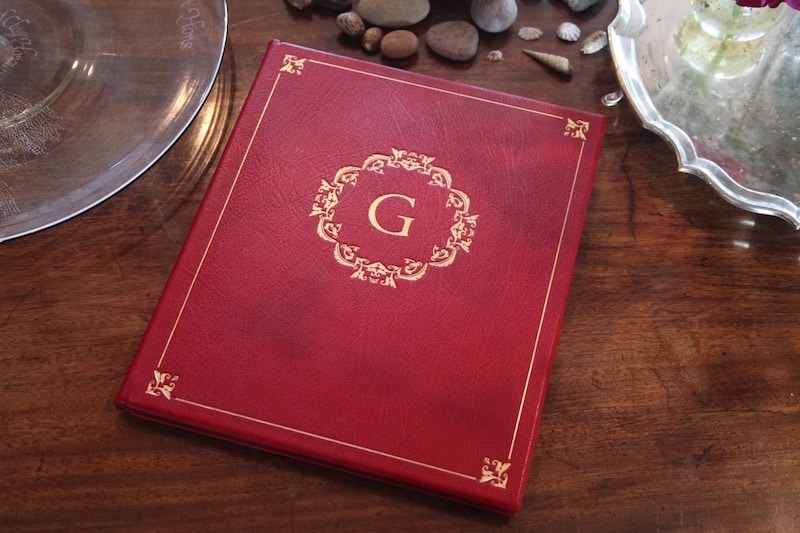
Genealogica is a unique firm that its clients instruct to undertake extensive ancestral research, delivering extraordinary findings by working with intentional government agencies and a global network of the most notable historians. Once a client’s family history has been unearthed to its fullest extent, Genealogica’s Emmy award-winning storytellers, published authors and academic historians craft a narrative to bring this unique history to life. The fun doesn’t stop there, though: Genealogica also commissions skilled artisans to design and bind these stories into future heirlooms, creating priceless works of art in the form of Ancestral Encyclopedias. The team can also plan and guide ancestral journeys, produce documentary-quality films of each project, locate and acquire lost family heirlooms, and build legacy collections.

The company’s co-Founder and CEO, Al Edgington, is no stranger to the intricacies of family history or the level of research that goes into unearthing such stories. He was nominated for Primetime Emmys in 2012 and 2014 for his work as the Executive Producer on NBC’s Who Do You Think You Are?, producing 35 episodes of the celebrity-led genealogical travel series over a five-year period. Since co-Founding Genealogica in 2013, Edgington has reunited families, shed light on the personal connections we bear to our pasts, and delivered exquisite works of art to express his researchers’ findings.
“All we have is human,” says Edgington, “and the information we’re able to uncover is valuable only for families. It’s human capital.” The work that the Genealogica team carries out goes beyond the performance of a service that its clients pay for. It abstracts itself from anything transactional when one considers the way it can help families understand one another, their pasts and their futures more clearly. “Clients who have all the luxuries in the world have told me that the best money they’ve ever spent is with Genealogica,” he says. So with this in mind, here are some of the top tips I took away from my conversation with Edgington, perfect for anyone about to embark on a journey into the past…

Prepare to Question the Perceived Identity of Your Family

During the filming of a 2012 episode of Who Do You Think You Are with Rita Wilson, the American Actress known for her appearances in Volunteers and Sleepless in Seattle, Edgington recalls her observation that “you can’t explain it. There’s something a little bit different about your life afterwards.” The existential quality that new, poignant information can carry is something you should absolutely prepare yourself for. For many families, enduring narratives about their cultural, religious or geographical history go unquestioned, and histories are fabricated for survival or out of shame. When the real story is uncovered, it can trigger feelings of loss ​of ​these very familiar stories and can cause families to reassess their sense of collective identity. “One client approached us for a 50th birthday present for a loved one,” Edgington tells me, “believing that the giftee’s family had always been Catholic. She grew up Catholic and felt a strong connection to her heritage in the religion. However, we discovered that her family, having suffered many losses in the Holocaust, were Jewish refugees. Even just this very objective information can completely change the identity of a family.”

History is Messy Business and Context is King

“History is mucky,” says Edgington, “and the past is complicated.” Genealogica’s clients and anyone approaching ancestral research should expect to shoulder the burden of objectivity as they begin to discover their family’s past, some of which could be unsavoury. “The truth is,” he says, “I have yet to meet a family without something hidden up its sleeve,” so it makes sense to manage your expectations. As Edgington advises, “don’t expect you’ll be from a bunch of heroes!”

“The important thing to remember is that there are so many reasons people choose to do the things they do,” says Edgington. Even if you disagree or are morally opposed to the actions of your ancestors, the likelihood is that they were only trying to do their best in the context in which they were surviving. The key is to keep a level head and understand that although your ancestors’ actions feel inextricably linked with your own, they do not define you. “Although we work with our clients to tell their stories in the context of historic world events,” says Edgington, “they appreciate that some of this stuff will be ugly, but also that the process is incredibly grounding.”

Festival Packing Essentials

Festival season is almost upon us. Eager groups of friends have gathered conspiratorially around laptops for tickets, while piles of tents, wellies, face paints and sleeping bags have begun slowly to amass in the corners of hallways and living rooms across the country. The steady, growing ascent to the crescendo of the mosh pit, the glittering stages and the colourful lights cast across euphoric crowds is tangible at this time of year. But the glamour of festival life simply cannot be without the pragmatism of a good packing list. 

Before we take a deep dive into festival must-haves, a brief note on festival must-nots. According to Glastonbury Festival, anything made of glass can be dangerous and is likely to be confiscated (including mirrors and perfume bottles). It also suggests avoiding non-biodegradable body glitter. Non-biodegradable glitter is a damaging source of microplastic and can be dangerous, clogging pipes, hurting animals and even entering the human body. Another environmental no-go is the use of disposable wipes, and yes, even biodegradable wipes! They release greenhouse gases when they decompose, so making them less desirable than their manufacturers might care to admit. The Glastonbury organisers suggest a washcloth and a bar of soap – a much more eco-friendly alternative.

Your packing list needn’t be a chore to compose. Think of it like a more pragmatic, waterproof edit of your daily life…

All the Gear

The least glamorous but most important part of your list is your camping gear. Invest in a good quality tent that gives you a little slice of solace to return to when you need a break or a nap. Equally, a sleeping bag (and a roll mat or blow-up mattress) that keeps you warm will be your best friend when temperatures drop and the dancing stops. 

No matter the thought and consideration you’ve put into your festival attire, you’ll feel the benefit of even the least aesthetic rain jacket or a waterproof layer. It’s difficult to dry soggy clothes, especially denim, so make sure your favourite cut-offs are covered and dry for the return of the sunshine. 

Prepare to lose any style of footwear beyond a sturdy wellington boot as you trudge through the churned up mud at any festival this year. The beauty of the festival outfit is that it is only elevated by the cool, casual effect of muddy wellies. Think Kate Moss wearing a gold lurex mini dress and battered hunter wellies: the very pinnacle of festival chic. 

Clean Bandit

Beyond the Glastonbury-recommended soap and washcloth, there are some great hacks that keep you (almost) squeaky clean for the duration of a festival. The very first step starts at home. Your last shower should be the best shower you’ve ever had, but more than just savouring each drop of water, make sure you use an exfoliator to remove dead skin to give yourself a headstart. You should also give your hair a thorough wash, using lots of conditioner to ensure it looks its best before you forego any further care and attention for the next couple of days. 

In the absence of a shower, dry shampoo and rinse-free cleansers should be your go-tos. Shower gels that don’t require water actually remove grease and grime instead of just masking them, so you can be as clean as they make you feel.

Supporting Artists

Festival season just isn’t the same without just a few of everyday life’s creature comforts. Make sure you invest in a high-quality portable phone charger to avoid expensive mobile charging at festival charging points. This way, you can rest assured you can contact friends and family and have enough battery life for all those Instagram stories. 

For an eco-friendly spin on festival living, bring a reusable water bottle or coffee cup to cut down on waste and remind you to keep hydrated. 

Of course, you can’t expect to have the most restful nights at any festival, but there are ways to increase your chances of getting some quality sleep. Using earplugs and an eye mask will help you to summon a semblance of calm for a few hours a night, leaving you feeling refreshed and ready to enjoy the music and the atmosphere in the morning. 

Top 5 Scenic Train Routes

By Anya Cooklin-Lofting

It is rare these days to stumble upon moments devoid of the need for distraction. Podcasts and music streaming services deliver almost constant scores over which to perform our daily tasks and we have windows to the Universe tucked into our pockets for easy-access escapism. Life under lockdown was particularly screen-centric, so to make up for lost time, I have begun chasing down moments to live in, distraction-free. Keeping my phone in my handbag at dinner with family and friends has been a great place to start, as has been removing my headphones on my morning jogs to hear the birds and the rustle of the wind in the leaves.

Confident in the knowledge that watching the world go by in real-time brings balance, a sense of peace and an earthly pace to each day, I began to wonder how best to sit back and focus on the world around me. It became very apparent that travel, and being in transit more specifically, offers the perfect environment in which to do that. While flying gives you awe-inspiring views across whole countries and cloudscapes, there is something far more human, more intimate, about train travel. Tracking the shifting landscapes as they modulate like stage sets reveals a world of bucolic splendour, glistening, glass cities, coastlines battered by relentless tides and valleys clad with thick forests. Unlocking your phone as you snake along a track that hugs the undulations of a crumbling coastline or as you pass over a soaring viaduct feels positively criminal.

So, today, I’ll be rounding up five of the most scenic train trips around the world. Prepare for rugged mountainous landscapes, endless seascapes of aquamarine and epic architecture to give your next adventure a hit of Golden Age grandeur.

The Venice Simplon-Orient-Express

What better train trip to start with than the Venice Simplon-Orient-Express, a Belmond train that breathes life into stories of spies and detectives set onboard its illustrious carriages. The most popular route on this storied train begins in London, arriving in Verona or Venice, although Prague, Vienna, Paris and Budapest also benefit from its 5-star services. Guests travel in one of six private suites each named after some of Europe’s most historic cities, paying homage to the train’s journeys through the very veins connecting Europe’s cultural capitals. In this case, of course, the interior might be just as alluring as the exterior views, but when it comes to simply luxuriating in your surroundings, either will do nicely.

California Zephyr

A tasting menu of the delights of American variety, the California Zephyr takes passengers from Chicago, Illinois to Emeryville California via showstopping sights including the Rocky Mountains, the fiercely red, sculptural plains of Utah, the Sierra Nevada, the Donner Pass and San Francisco Bay. Travellers have the option to visit the Sightseer Lounge complete with broad, tall windows and comfortable, window-facing seating for optimal views. Beware, though – the lounge seats are available on a first-come, first-served basis and it fills up quickly.

The TranzAlpine

New Zealand is something of a lodestone for adventure-seeking, global travellers with a love of the great outdoors. Although much Kiwi travel makes best use of its slick domestic flight network, the TranzAlpine express train route is one of very few in existence. Whisking passengers from the bustling city of Christchurch to the historic, West Coast town of Greymouth, the journey hugs the Waimakariri River, negotiates the Southern Alps and offers striking views across miles of beech forests.

The Mandovi Express

Your 12-hour journey on board the Mandovi Express leaves from the Victorian spectacle of Mumbai’s Chhatrapati Shivaji Maharaj Terminus, an Italian Gothic-style station designed by architectural engineer, Frederick William Stevens. Weaving its way down the Konkan Coast flanked by the Arabian Sea and the Western Ghats, the train crosses over 2,000 bridges, passes coconut groves and reveals the lush plains of the West Coast’s countryside. Passengers are free to await their arrival in Madgaon from their seats or from the pantry car, watching the cooks conjure a heady mix of traditional cuisine including thalis, biryanis and dals.

The Trans-Siberian Railway

Russia is certainly a country of extremes and its Trans-Siberian Express is no exception. The longest railway line in the world, the Trans-Siberian Express connects Europe’s largest city, Moscow, to Vladivostok on the Pacific Ocean, across almost 10,000 kilometres. For over 100 years the railway has connected the two cities, but plans are now in place to extend the line to Mongolia, China and North Korea. The current route takes passengers over the Ural Mountains, across the sprawling Steppe and offers views of Lake Baikal, the world’s deepest, oldest and largest freshwater lake.