Tag: family

Protecting Family Heirlooms for Future Generations

By Anya Cooklin-Lofting

In a world subject to such constant change, family heirlooms can be seen as symbols of heritage, culture, tradition and memory. They are cherished artefacts that hold genuine meaning for families across the world. No matter if the object in question is of astronomical or negligible financial value, these tokens, be they Old Master paintings or gems inherited over generations, heirlooms not only give us a sense of history but also a feeling of deep connection to our lineage. This month, I spoke to three experts in the business of caring for inherited heirlooms to get a sense of what goes into protecting and preserving paintings, antiques, jewellery and more. 

Gander & White: Custodians of The Irreplaceable

Gander & White, renowned for its expertise in fine art transportation and logistics, holds a Royal Warrant and has transported stored collections from some of the most notable galleries and families globally. When it comes to private families and family offices in particular, Alexander Bradford, the company’s Business Development Manager, believes that it’s all about offering clients a bespoke service that caters to each distinct requirement.

When working with Gander & White to transport heirlooms to another property, for example, or put them into storage during a renovation, the process often begins with a consultation. This involves a dedicated project manager assigned to each client. Gander & White also conducts site visits to ensure accurate estimates and the identification of potential challenges. For international moves where a piece of art must be shipped from one residence to another, Gander & White draws on its extensive global knowledge of export regulations and customs formalities. Boasting an unrivalled white glove service, Gander & White ensures the safe passage of these cherished items, often collaborating with partner ICEFAT agents when needed. All members of ICEFAT, an organisation representing over 70 of the finest independent art transportation firms from 34 countries including Gander & White, are subject to rigorous auditing against a series of Standards laid out by EY, meaning clients can rest assured that their heirlooms will be cared for during complex international journeys. 

Bradford and his international team at Gander & White understand the emotional weight his clients attach to family heirlooms and resonate with the idea that they act as bridges between generations. “By working with us and our team of fine art technicians,” he says, “clients are ensuring that their precious objects and collections are treated with the utmost care and attention to ensure that they are preserved in pristine quality for generations to come.”

Doerr Dallas: Preparation Is Key

Doerr Dallas, an independent valuations firm, recognises the importance of understanding the true value of family heirlooms. Rachel Doerr, the company’s founder, has valuable insights into the circumstances that prompt families to seek her expertise. Valuations serve not only as a means to assess financial worth but also as a way to ensure a smooth transition of assets across generations. “Generally, it’s much better for the current owners of the family heirlooms to decide who gets what when the time comes,” she says. “It’s a much cleaner way of working than suggesting that the family or beneficiaries of the will decide between themselves. We very much try to encourage clients to think about what would happen in the worst-case scenario.”

Doerr advocates for informed decisions through valuations. An up-to-date valuation is indispensable, offering reassurance and the ability to make accurate insurance claims in the face of unforeseen events. “Very little will be worth the same amount five years from now – all general items appreciate,” she says. “In the event of a fire, for example, you need to be able to claim back the current value of any objects that were damaged,” she explains, adding that, “without an up-to-date valuation, this won’t be possible.”

Aston Lark: Reassurance Above All

Aston Lark, an insurance company, understands that protecting family heirlooms goes beyond securing financial assets – it’s also about managing the personal connections people have to their belongings. Joshua Meadowcroft, the firm’s Business Development Manager, understands the emotion attached to these treasures where his private clients are concerned. “The key to working with our private clients is primarily about understanding their needs to make sure that we source the correct cover,” says Meadowcroft. “Then we can build trust by offering the best advice to protect their prized assets,” he continues.  For Meadowcroft, this differs to commercial insurance as there is a lot more of an emotive side to private clients’ decision-making. 

Meadowcroft also makes a point of advising his private clients to give them the same level of reassurance that Aston Clark’s institutional or commercial clients enjoy. “Where a business may have different employees providing different advice on aspects of the company, private clients they may not have this breadth of expertise available to them,” he says.  “We feel an obligation to provide this level of guidance, which can include conducting surveys, obtaining values and recommending security companies.”

From fine art to cherished possessions like jewellery or furniture, heirlooms carry stories, values beyond the financial, and memories that transcend time and generations. By taking meticulous care of these relics from our familial pasts, we honour our lineage and leave behind a legacy for future generations. 

Genealogy: A Journey Into the Past

By Anya Cooklin-Lofting

The job of a genealogist is to prove, beyond reasonable doubt, the distinct, frequently remarkable, often unpredictable history of a family. Using family lore, genetic analysis, redacted files, historical documents and medical records, genealogists connect the dots to create a more rounded picture of how their clients have come to exist. They give individuals and their families a unique historical framework to understand how and why their ancestors made the decisions, entered into the marriages, moved to the countries or even committed the crimes that they did. Beginning your journey into genealogy is much like sitting for a portrait without the generous artistic license many painters afford to their subjects. A genealogist will present you with new data, strange new narratives and sometimes grim realisations, warts and all, that can change not only your self-perception but that of your entire family, living or dead. In the ultimate endeavour in separating fact from fiction, a great genealogist will conjure real voices from the past, scratching the very human itch that we each harbour to understand where (and who…) we come from.

Using the Past to Inform the Future

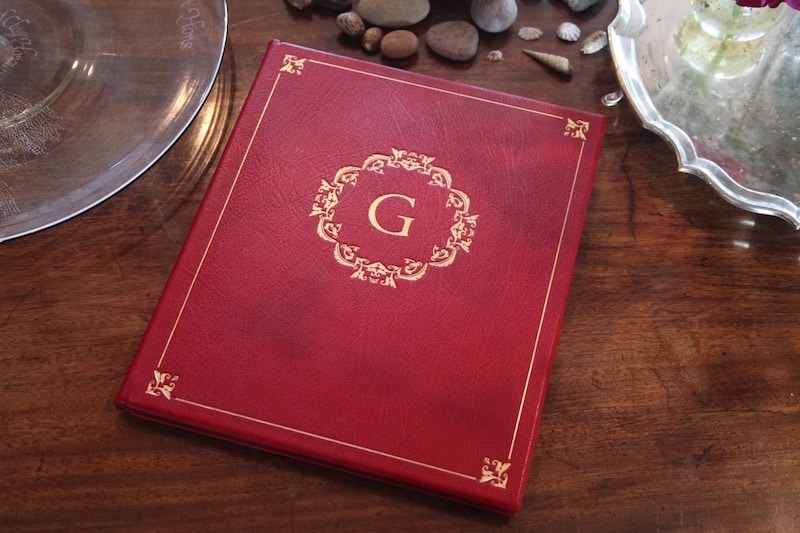
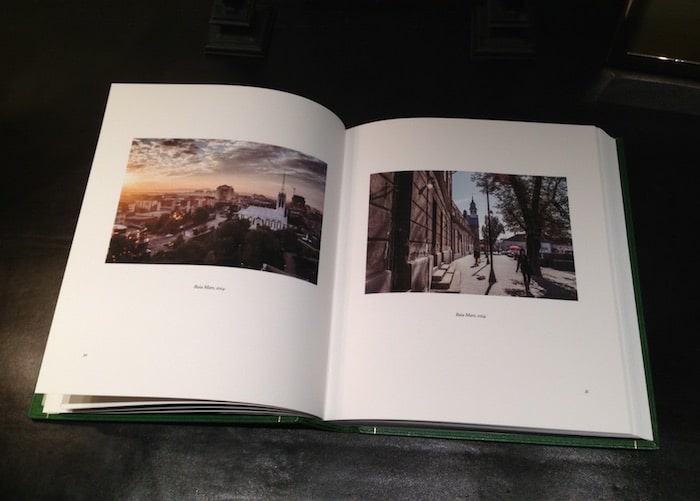
Genealogica is a unique firm that its clients instruct to undertake extensive ancestral research, delivering extraordinary findings by working with intentional government agencies and a global network of the most notable historians. Once a client’s family history has been unearthed to its fullest extent, Genealogica’s Emmy award-winning storytellers, published authors and academic historians craft a narrative to bring this unique history to life. The fun doesn’t stop there, though: Genealogica also commissions skilled artisans to design and bind these stories into future heirlooms, creating priceless works of art in the form of Ancestral Encyclopedias. The team can also plan and guide ancestral journeys, produce documentary-quality films of each project, locate and acquire lost family heirlooms, and build legacy collections.

The company’s co-Founder and CEO, Al Edgington, is no stranger to the intricacies of family history or the level of research that goes into unearthing such stories. He was nominated for Primetime Emmys in 2012 and 2014 for his work as the Executive Producer on NBC’s Who Do You Think You Are?, producing 35 episodes of the celebrity-led genealogical travel series over a five-year period. Since co-Founding Genealogica in 2013, Edgington has reunited families, shed light on the personal connections we bear to our pasts, and delivered exquisite works of art to express his researchers’ findings.

“All we have is human,” says Edgington, “and the information we’re able to uncover is valuable only for families. It’s human capital.” The work that the Genealogica team carries out goes beyond the performance of a service that its clients pay for. It abstracts itself from anything transactional when one considers the way it can help families understand one another, their pasts and their futures more clearly. “Clients who have all the luxuries in the world have told me that the best money they’ve ever spent is with Genealogica,” he says. So with this in mind, here are some of the top tips I took away from my conversation with Edgington, perfect for anyone about to embark on a journey into the past…

Prepare to Question the Perceived Identity of Your Family

During the filming of a 2012 episode of Who Do You Think You Are with Rita Wilson, the American Actress known for her appearances in Volunteers and Sleepless in Seattle, Edgington recalls her observation that “you can’t explain it. There’s something a little bit different about your life afterwards.” The existential quality that new, poignant information can carry is something you should absolutely prepare yourself for. For many families, enduring narratives about their cultural, religious or geographical history go unquestioned, and histories are fabricated for survival or out of shame. When the real story is uncovered, it can trigger feelings of loss ​of ​these very familiar stories and can cause families to reassess their sense of collective identity. “One client approached us for a 50th birthday present for a loved one,” Edgington tells me, “believing that the giftee’s family had always been Catholic. She grew up Catholic and felt a strong connection to her heritage in the religion. However, we discovered that her family, having suffered many losses in the Holocaust, were Jewish refugees. Even just this very objective information can completely change the identity of a family.”

History is Messy Business and Context is King

“History is mucky,” says Edgington, “and the past is complicated.” Genealogica’s clients and anyone approaching ancestral research should expect to shoulder the burden of objectivity as they begin to discover their family’s past, some of which could be unsavoury. “The truth is,” he says, “I have yet to meet a family without something hidden up its sleeve,” so it makes sense to manage your expectations. As Edgington advises, “don’t expect you’ll be from a bunch of heroes!”

“The important thing to remember is that there are so many reasons people choose to do the things they do,” says Edgington. Even if you disagree or are morally opposed to the actions of your ancestors, the likelihood is that they were only trying to do their best in the context in which they were surviving. The key is to keep a level head and understand that although your ancestors’ actions feel inextricably linked with your own, they do not define you. “Although we work with our clients to tell their stories in the context of historic world events,” says Edgington, “they appreciate that some of this stuff will be ugly, but also that the process is incredibly grounding.”